Long ago, when Empress Jingū rested on a stone here, seven-coloured clouds rose, and a deity in the form of a child appeared. From this miraculous event, the site became known as the “Shrine of Clouds” and was carefully revered. During the Heian period (794-1185), the shrine was dedicated to the divine spirit of Emperor Ōjin, and under the order of Kiyohara no Masataka, the present Kumo Hachiman Shrine was constructed. One of the shrine’s enduring traditions is Kappa-gaku (a traditional music and dance ritual), which has been designated a prefectural cultural asset with over 350 years of history. During the annual grand festival, the lively melodies of Kappa-gaku echo through the surrounding mountains, enchanting visitors. The shrine grounds are also dotted with playful kappa statues—can you find them all? With its mix of legend, music, and a slightly mysterious yet joyful atmosphere, Kumo Hachiman Shrine is a place that delights and inspires everyone who visits.
■ information
inquiry
Kumo Hachiman Shrine
address
363 Miyazono, Yabakei, Nakatsu City, Oita Prefecture

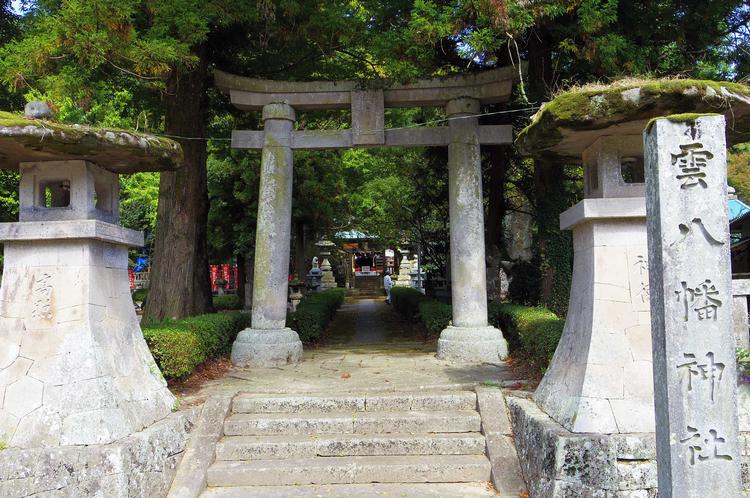








During the Heian period (794-1185), the shrine was dedicated to the divine spirit of Emperor Ōjin, and under the order of Kiyohara no Masataka, the present Kumo Hachiman Shrine was constructed.
One of the shrine’s enduring traditions is Kappa-gaku (a traditional music and dance ritual), which has been designated a prefectural cultural asset with over 350 years of history. During the annual grand festival, the lively melodies of Kappa-gaku echo through the surrounding mountains, enchanting visitors.
The shrine grounds are also dotted with playful kappa statues—can you find them all? With its mix of legend, music, and a slightly mysterious yet joyful atmosphere, Kumo Hachiman Shrine is a place that delights and inspires everyone who visits.