During his travels, the monk Zenkai visited Yabakei and after witnessing travellers die on the dangerous cliff path, began carving a safe passage through the cliffs in 1735. Zenkai raised funds by visiting local households for donations and, together with hired stonemasons, worked tirelessly using only chisels and hammers. After 30 years of labour, the tunnel was finally completed in 1764, stretching a total length of 342 metres. In 1750, a grand memorial service marked the completion of the first phase of construction. From then on, a toll was collected—four mon per person and eight mon per horse or cow—to fund the ongoing work, making it Japan’s first toll road. (The mon was the currency used from the Muromachi period [1336-1573] until it was replaced by the yen in the early Meiji period [1870s]).
■ information
inquiry
address
Honyabakei, Nakatsu City, Oita Prefecture
tel
Regular holiday
fee
parking
86 regular car-sized spaces、7 large car-sized spaces

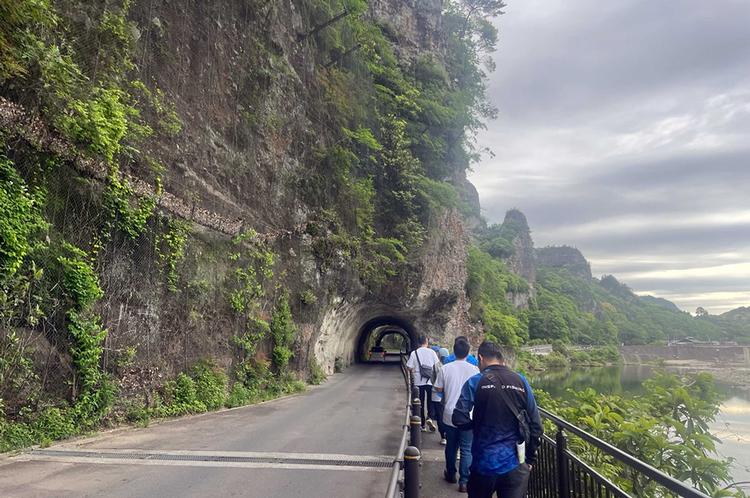
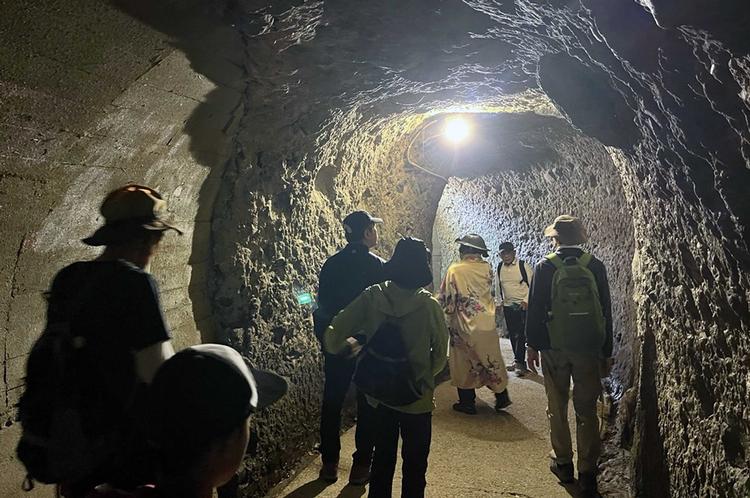
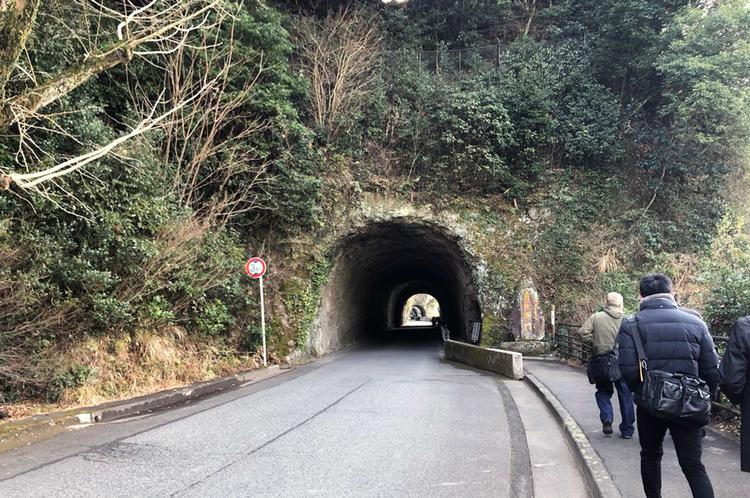
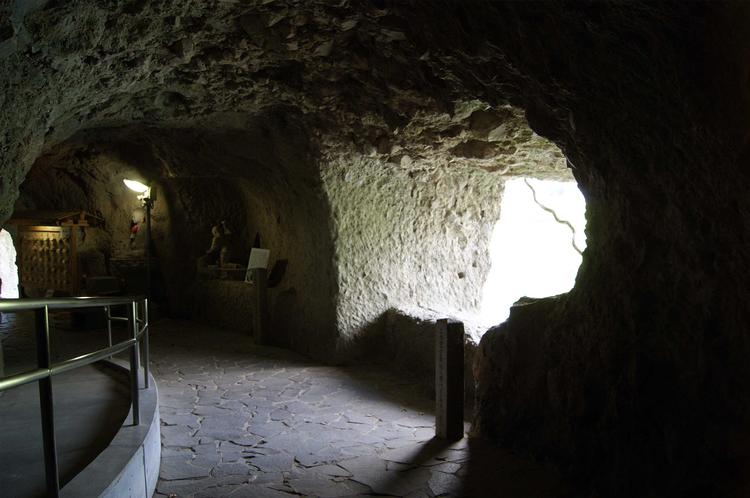




Zenkai raised funds by visiting local households for donations and, together with hired stonemasons, worked tirelessly using only chisels and hammers. After 30 years of labour, the tunnel was finally completed in 1764, stretching a total length of 342 metres.
In 1750, a grand memorial service marked the completion of the first phase of construction. From then on, a toll was collected—four mon per person and eight mon per horse or cow—to fund the ongoing work, making it Japan’s first toll road. (The mon was the currency used from the Muromachi period [1336-1573] until it was replaced by the yen in the early Meiji period [1870s]).